Apia City, Samoa
Apia City, Samoa
City Scan
May 2025




Executive Summary
Setting the Context
Apia is the capital and largest city of Samoa. The city sits in the South Pacific Ocean and is located on the central north coast of Upolu, Samoa’s second-largest island. This analysis includes the city of Apia, and the surrounding areas along the Main West Coast Road connecting the Faleolo International Airport.
Population and Demographic Trends
Apia’s population has decreased between 2001 to 2021, with an average rate of 0.4% annually, and in 2021 the area had a population of 35,974. A large proportion of the population lives in the city of Apia, and in the Fale‘ula region. Wealth is concentrated in the city of Apia.
City Competitiveness and Economic Activity
Major economic activity in the area of interest is concentrated in the city of Apia and near the Faleolo International airport region.
Built Form
Most of the land in Apia comprises of tree cover, followed by grassland and built-up area. Schools are well distributed within the region, while health facilities are clustered in the city of Apia alone.
Climate Conditions
Solar availability is favorable throughout the year in Apia. Air quality is good throughout the city, and the concentration of particulate matter does not exceed WHO safety standards. Apia shows a moderate Urban Heat Island effect, with higher surface temperatures in the Apia’s built-up core and near the international airport.
Risk Identification
Sea level rise is a significant risk in Apia, as are cyclones. Almost the entire coastline already impacted by sea level rise, and cyclones regularly pass near Apia or make landfall. Risks of earthquakes and landslides are present and significant in the area. Most of the built-up area has low landslide susceptibility, but susceptibility is higher near the mountain peaks in the south and southeast. The risk of earthquake-related damage is moderate.
Local Institutions and Planning
Apia is governed by 63 village led governments (rural and urban) which are responsible for the overall administration and development of their respective jurisdictions. Samoa’s medium to long-term development strategy is guided by Samoa 2040 and the Samoa Apia City Development Strategy (2015) serves as the Urban Development Plan for the city.Setting the Context
Basic City Information
Apia, the capital and largest city of Samoa, is strategically situated in the South Pacific Ocean. It encloses the Apia Harbor, a significant port facilitating both domestic and international trade. With a population of around 36,000 residents, Apia serves as the nation’s political, economic, and cultural hub.
Similar to many Pacific Island countries, Samoa’s economic growth is concentrated on the main island, within the urban area of Apia. The local economy of Apia depends primarily on government services, trade, and tourism, which contributes over 70% of the country’s GDP. The agricultural, forestry, and fishing sectors also play a significant role, employing nearly two-thirds of the workforce. The economy heavily relies on foreign development assistance in the form of loans, grants, and direct aid, as well as remittances from overseas. Moreover, around 60% of the population engages in informal employment, mainly in subsistence agriculture or local businesses.
Samoa’s economy, though, is highly vulnerable to external factors such as fluctuations in commodity export prices, crop failures, and variations in tourism demand. Additionally, Apia faces an increased susceptibility to natural hazards, which are expected to intensify in the near future. This, coupled with the challenges posed by rising sea levels, increasing ocean temperatures, and acidification, presents a continual set of obstacles for Samoa’s economic development.
The boundary lines mark the area of interest for the City Scan. These lines may differ from the city’s official administrative boundaries and may include multiple jurisdictions.
Population and Demographic Trends
Population Density
- Population density is highest near the coast, especially in the Fale’ula area
- The city of Apia itself has a lower population density
This map estimates population numbers per 10,000 m2 grid cell. It provides a more consistent representation of population distributions across different landscapes than administrative unit counts. Knowing where people are is critical for impact assessments and intervention plans, especially those focused on service delivery, food security, climate change, network systems and natural disasters.
Population Growth
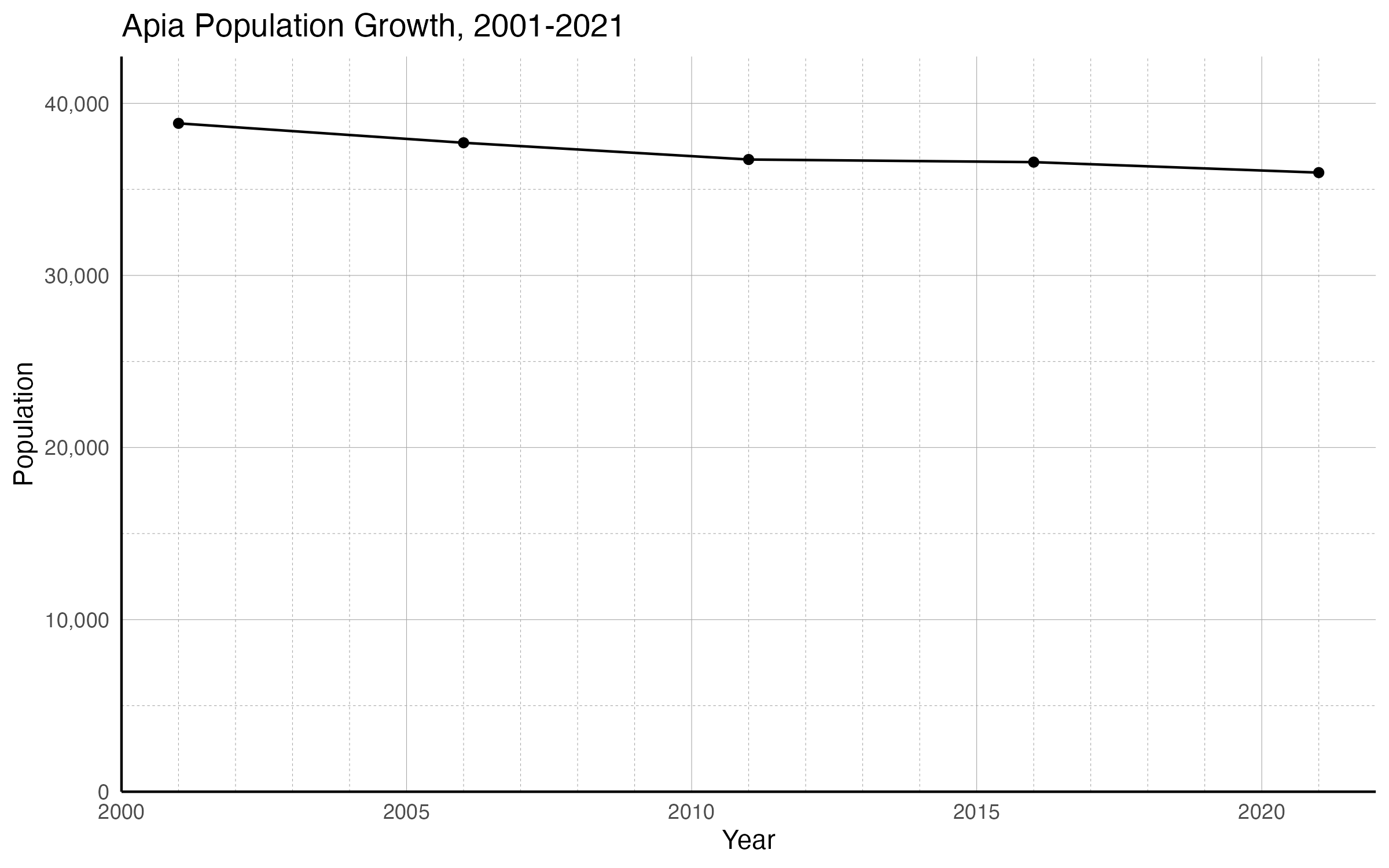
- Apia’s population decreased by 7% from 38,836 in 2001 to 35,974 in 2021, at an average annual rate of -0.4%*
- Samoa’s population has increased in this period, indicating possible migration from Apia to elsewhere in the country
- The statistical zone does not include Vaitele, Fale‘ula and other western areas
Population figures are typically used as a denominator for many indicators, and are a measure of demand for services. The line chart above summarizes the city’s population change according to census and other public data. High growth of urban populations, caused by rates of natural increase (more births than deaths) in urban areas, migration from rural to urban areas, and the transformation of rural settlements into urban places, puts pressure on cities to meet the new demand.
Population Density
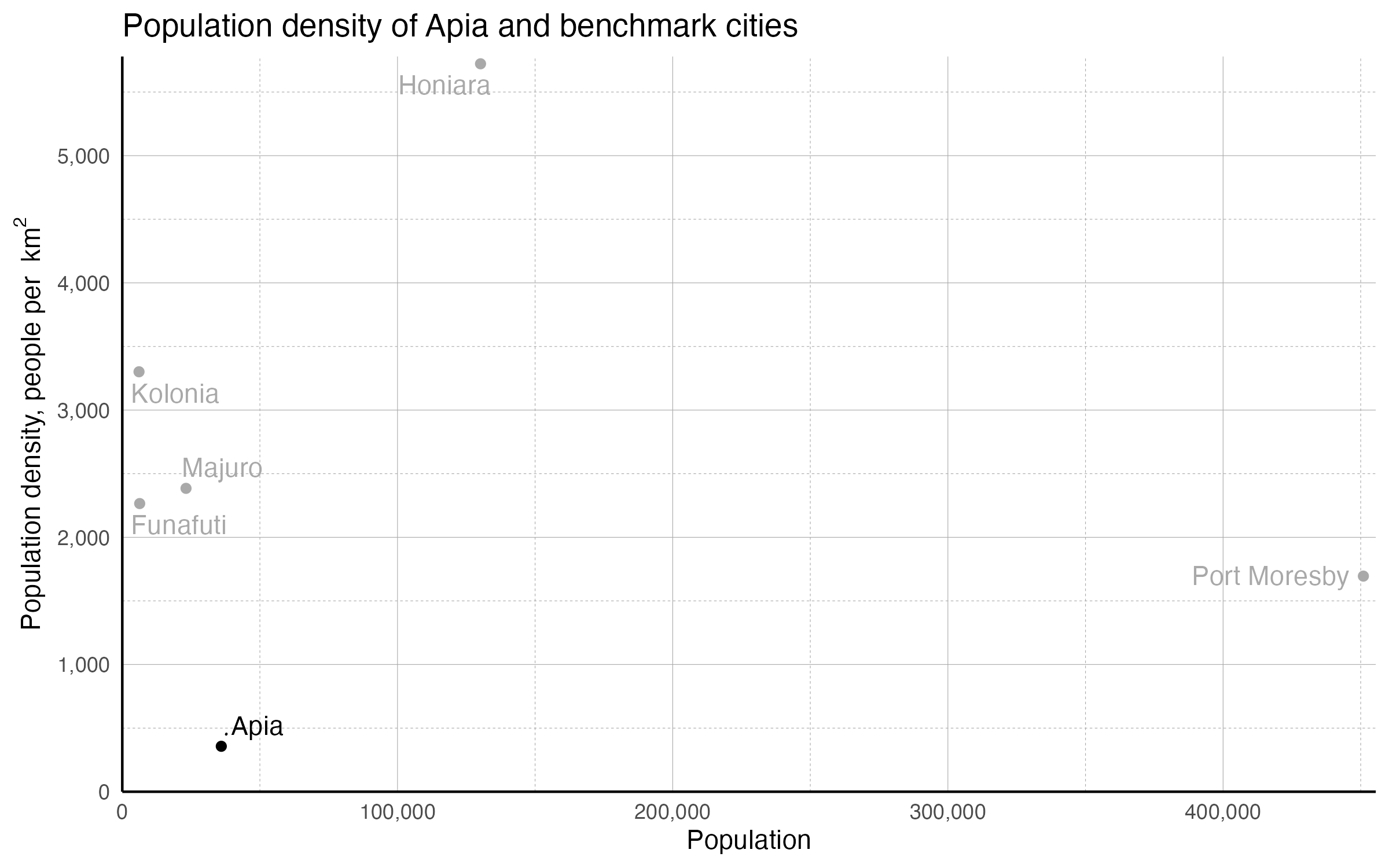
- With an area of 50.2 km2, Apia has a population density of 357 people per km2
- Among the 6 regional benchmark cities, Apia has the lowest density
Density is calculated using the most recent census population recorded and the official land area occupied by the city, and is an important measure of how cities function. Higher population density enables governments to more easily deliver essential infrastructure and services in urban areas at relatively low cost per capita. However, such benefits do not materialize automatically or inevitably. Whether a city’s population dynamics pose challenges or offer opportunities typically depends on the policies in play.
Populations and area are from Oxford, 2022, “Oxford Economics” or CityPopulation.de. Note that Oxford Economics uses quite large extents for its cities, meaning that the measured density is likely considerably lower than the density experienced by most inhabitants of the cities. Extents used by the both data sources may differ from the AOIs used by the City Scans.
Economic Activity
Economic Hotspots
- The main node of economic activity is in the city of Apia, in the Saleufi area
- The second node of economic activity lies in the area surrounding Faleolo International Airport.
This map measures the total emissions of nighttime lights from the monthly average of radiance for 2014 through 2022. Nighttime light radiance is a common proxy for economic activity: where there is more artificial light, there is generally more commercial activity. VIIRS observations are made fairly late at night, as its satellites cross the equator at around 1:30 local time; thus, the observed lights are typically street lights and nights which are left lit all night long. The correlation of nighttime light and economic activity is strongest for urban areas; it is less relevant in agricultural areas and areas with very low population density.
Map data from NOAA, “VIIRS Daily Mosaic”.
Change in Economic Hotspots
- Economic activity appears to be staying constant throughout the city of Apia, except in the Saleufi area
- Saleufi is already an important economic node, which appears to be increasing economically over the years as well.
The map illustrates monthly temporal changes from 2014 to 2022 in the emission of nighttime lights, indicating changes in economic activity. Positive values represent an increase in the intensity of nighttime light emission and, by proxy, economic activity, while negative values represent a decrease in the intensity of nighttime light emission, and economic activity.
Map data from NOAA, “VIIRS Daily Mosaic”.
Built Form
Land Cover
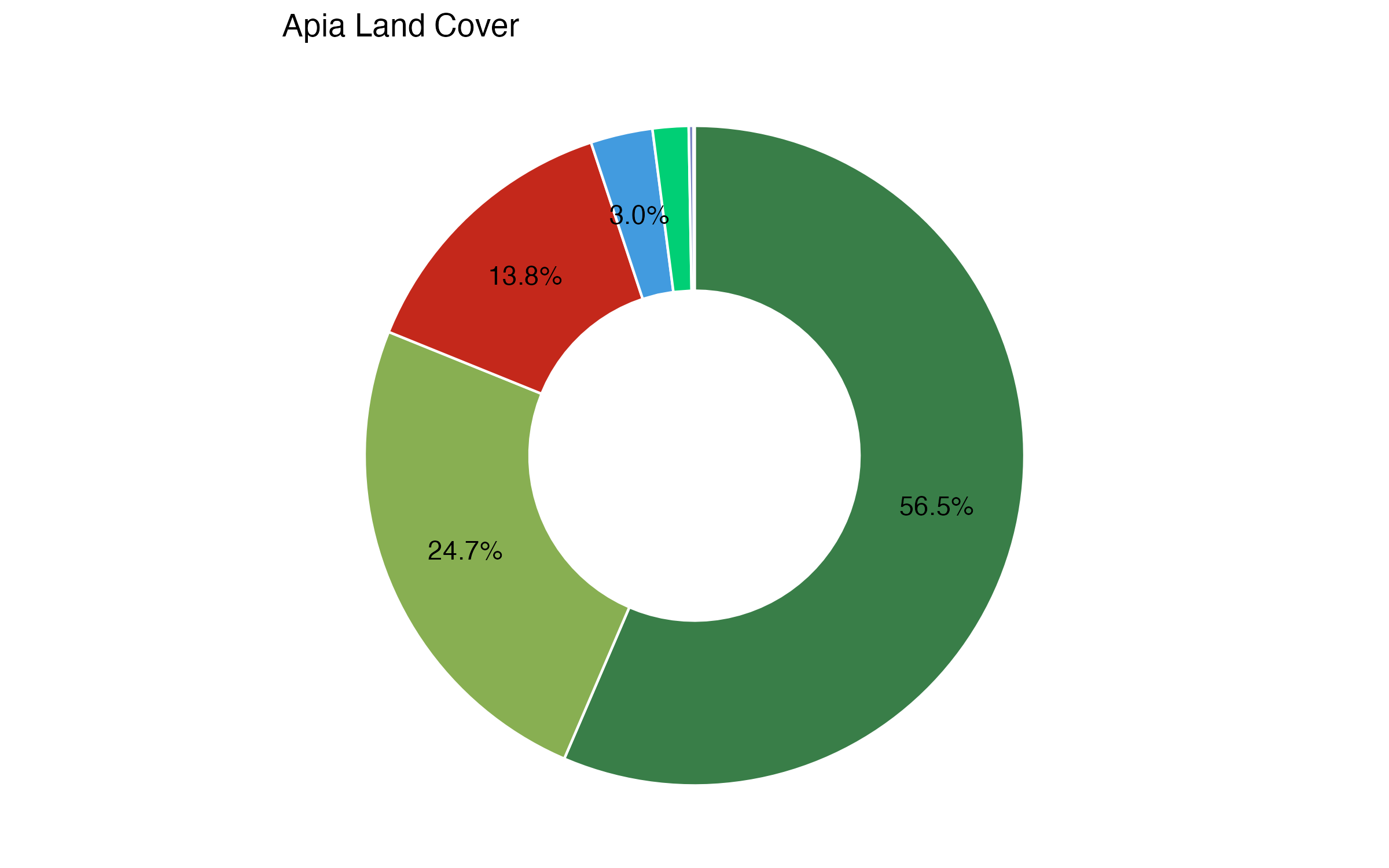
- Tree cover is the largest land cover class and covers 56.5% of all land
- Grassland is the next largest class, and comprises 24.7% of the land
- Built-up area is 13.8% of the total land cover
Land cover refers to the ground surface cover, including vegetation, urban infrastructure, water, and bare soil, among other classifications. Identifying land cover type helps to understand land utilization and inform planning policies and programs.
© ESA WorldCover project 2020 / Contains modified Copernicus Sentinel data (2020) processed by ESA WorldCover consortium’
Access to Schools
- Schools are well distributed throughout the Apia region
- A majority of the built-up area is within a 2.4-, if not 1.6-, km journey to a school
- Areas in the east of the city of Apia, however, are not in the proximity of a school
Using a proximity analysis along the existing road network, this map identifies the areas that are most- and least-accessible to schools. The analysis includes all facilities classified in OpenStreetMap as a school, kindergarten, college or university. Note that there may be more schools that are not included in OpenStreetMap.
Map data from OpenStreetMap and DLR, 2015.
Access to Health Facilities
- Health facilities are concentrated in the city of Apia in the most populous region
- Only some of the built-up area is within a 2- or even 3-km journey to a hospital or health clinic
- Areas in Fale‘ula and Afega are not close to a health facility, even though they have a significant population
Using a proximity analysis along the existing road network, this map identifies the areas that are most- and least-accessible to schools. The analysis includes all facilities classified in OpenStreetMap as a health amenity, clinic, or hospital. Note that there may be more health facilities that are not included in OpenStreetMap.
Map data from OpenStreetMap and DLR, 2015.
Climate Conditions
Solar Photovoltaic Potential
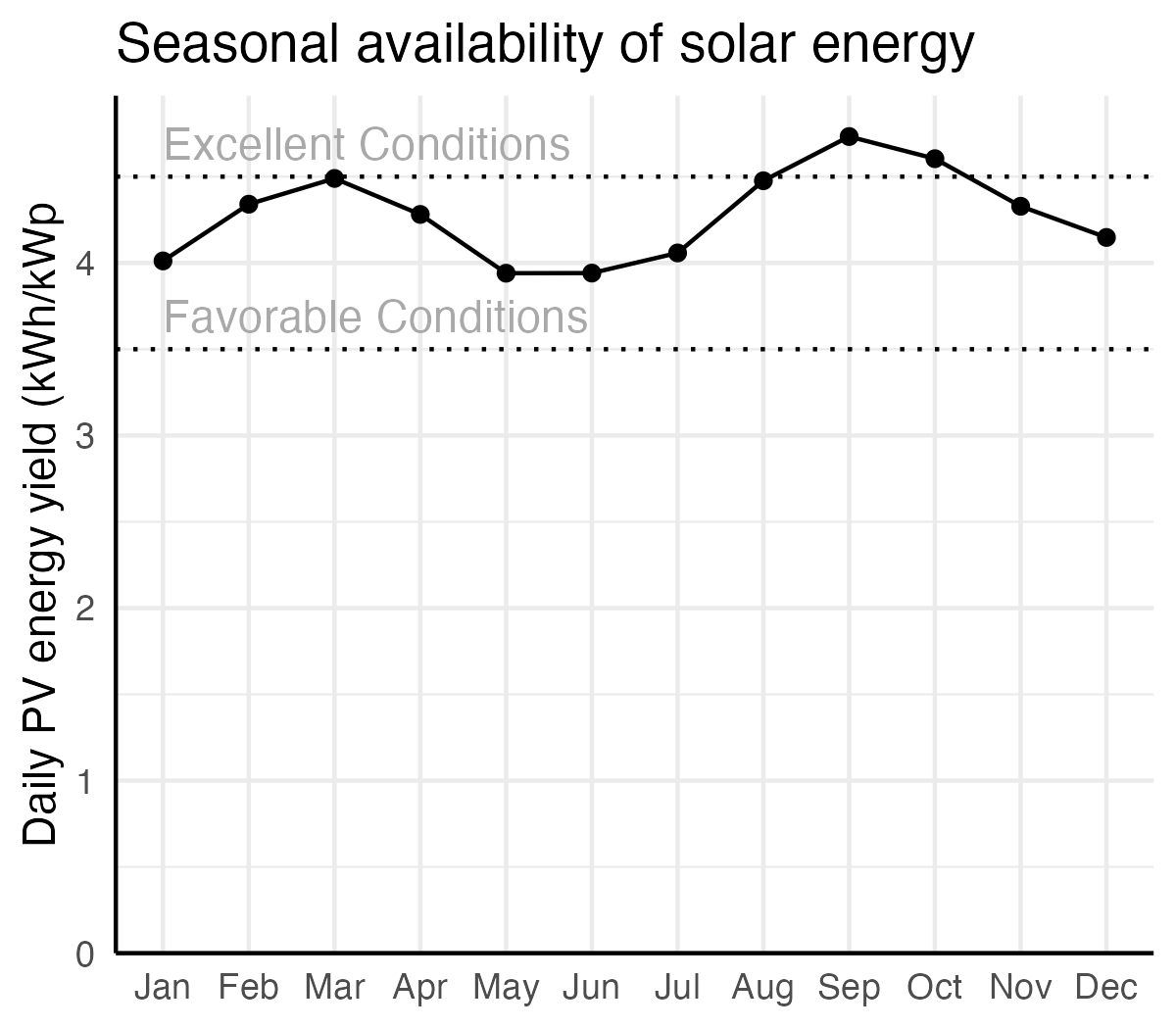
- PV power potential in Apia is favorable (1,277–1,641 kWh/kWp annually)
- Seasonal availability is favorable for almost the entire year, and the seasonality is low, meaning solar energy can be relied on in all months
- Solar power is most available along the coast, and across most of the city of Apia
Solar electricity offers a unique opportunity to achieve long-term energy sustainability goals. Photovoltaics (PV) is the most widely applied and versatile technology for solar power. The availability of solar energy depends on site conditions. This map displays an indicative estimate of daily specific yield, that is, how much energy a hypothetical PV system would produce for per unit of capacity (kWh/kWp). Values above 4.5 are considered excellent availability, while values between 3.5 and 4.5 are moderate.
Map data obtained from the “Global Solar Atlas 2.0, a free, web-based application is developed and operated by the company Solargis s.r.o. on behalf of the World Bank Group, utilizing Solargis data, with funding provided by the Energy Sector Management Assistance Program (ESMAP). For additional information: https://globalsolaratlas.info
The Global Solar Atlas uses generalized theoretical settings for a quick assessment of PV power potential for a selected site. An optimum tilt angle of PV modules and 100% availability (no shutdowns due to failure) are assumed.
Air Quality
- Air quality is good across all of Apia
- The concentration of PM2.5 in Apia is around 2.5-5 μg/m3 across the whole city, which is lower than the WHO safety standards of 5 μg/m3 of PM2.5
The concentration of particulate matter (PM) is a key indicator of air quality since it is the most common air pollutant affecting short and long-term health. This map displays the average annual concentration (µg per m3) of ground-level fine particulate matter of 2.5 micrometers or smaller (PM2.5).
PM2.5 particles are of greater concern than PM10 particles because their small size allows them to travel deeper into the cardiopulmonary system. According to the WHO and the United States EPA standards, PM2.5 concentrations should not exceed between 5 µg/m3 or 12 µg/m3, respectively. Higher concentrations of particulate matter may also reduce the availability of solar energy.
PM2.5 Grids are derived using annual data from 1998-2019 represent near-surface concentrations.
Map data from Hammer, 2022, “Global Annual PM2.5 Grids”.
Vegetated Areas
- Apia City has very high vegetation density, including in some areas with higher population density
This map displays the Normalized Difference Vegetation Index, which ranges between -1 and 1, with higher numbers indicating a higher density of green vegetation. Values of less than 0.1 typically indicate water, rock, and otherwise barren land; values of 0.1 to 0.3 are associated with shrubs and grassland; 0.3 to 0.5 corresponds to moderate vegetation; and values of more than 0.5 correspond to dense vegetation such as forests or mature crops.
Vegetation and green spaces in cities are associated with health benefits and the mitigation of environmental risks. More green space in a city can reduce temperatures and the urban heat island effect, lessen air pollution, and absorb floodwaters. Green spaces can also serve important civic, social, and quality of life functions.
Map data from European Space Agency, 2020, “Normalized Difference Vegetation Index”.
NDVI-based measures do not account for the proximity and spatial arrangement of green spaces within areal units. They also do not address the vertical dimension and density of green urban buildup.
Risk Identification
Elevation
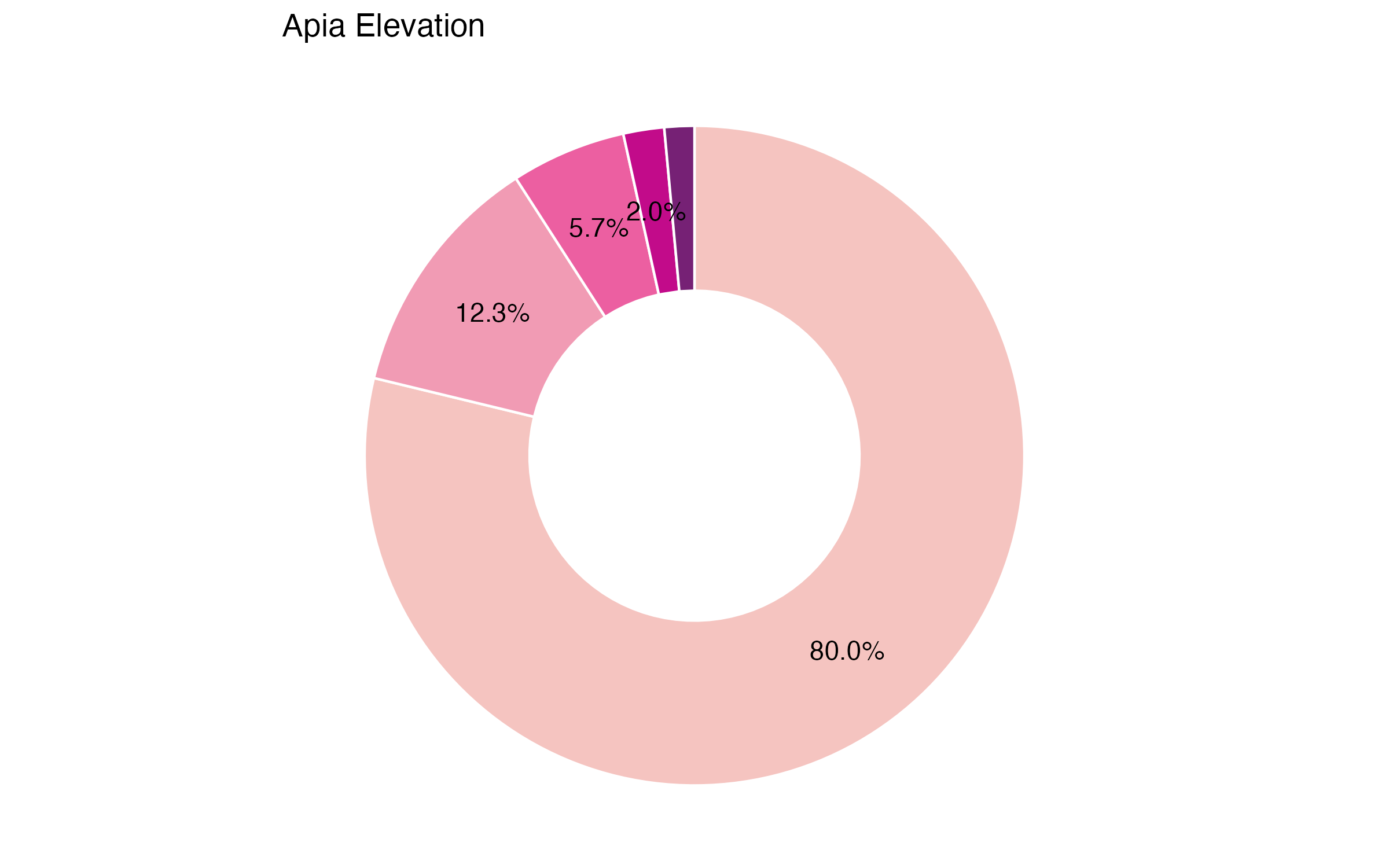
- Apia rises from sea level along the coast towards the inland
- There are several ridges running north-south
- 80% of the area is less than 90 m above sea level, all along the coast
Elevation informs an area’s vulnerability to many natural disasters. The height at which infrastructure, resources, and communities sit relative to normal water levels and tides, flood waters, and storm surges and waves informs their exposure. Elevation information is critical for communities to anticipate the impacts of disasters and to prepare resilient and cost-effective response and redevelopment strategies.
Map data from FABDEM V1-2.
Slope
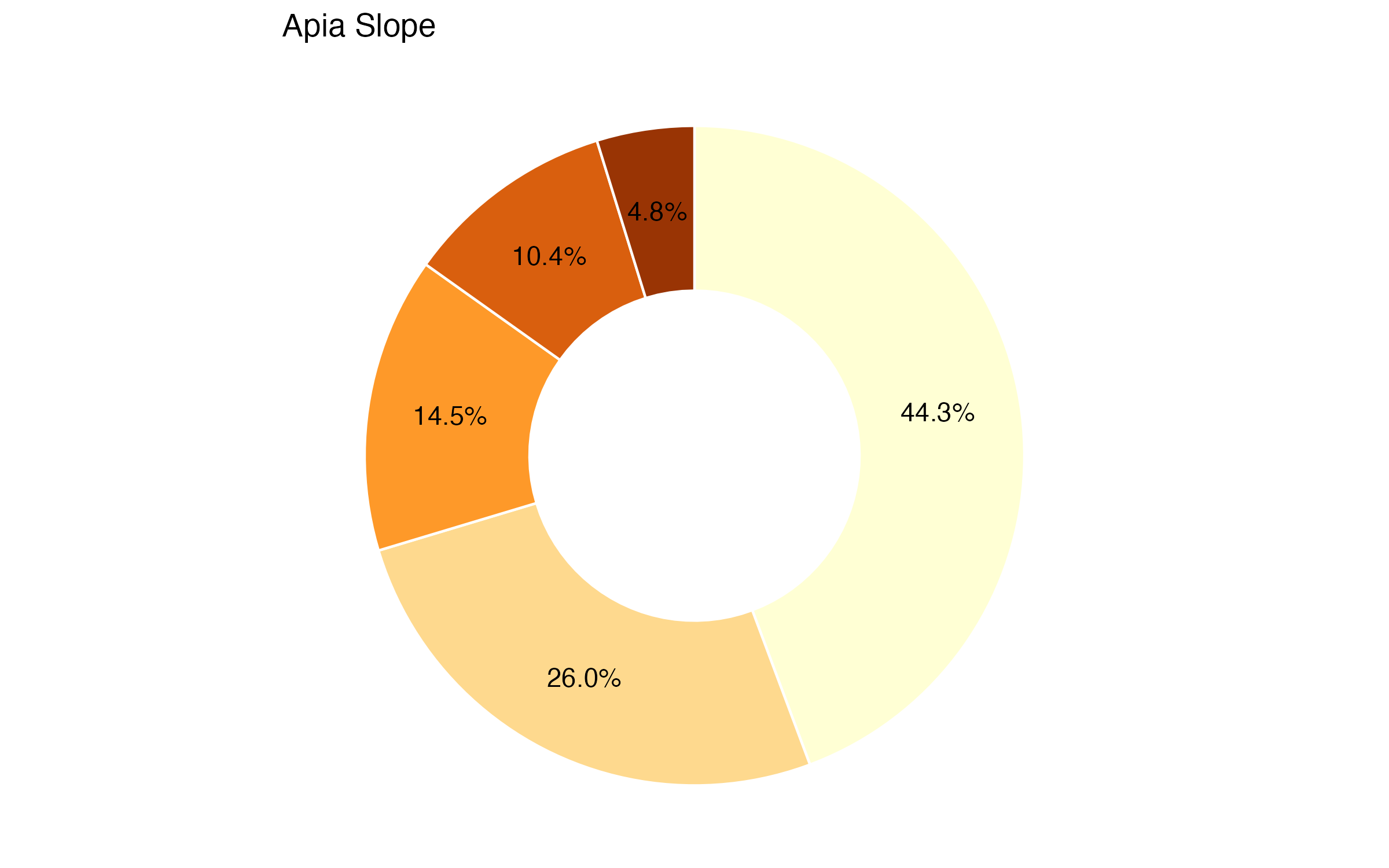
- The northern part of the region is at a lower elevation with a grade of less than 2° (3.5% grade)
- In the south and in ridges at the southeast, slopes are 10–20°
- Several mountains such as Mount Vaea and Mount Vaitele overlook the city of Apia
Slope refers to the percentage change in elevation over a certain distance. In hilly or mountainous areas, floods can occur within minutes after heavy rains, while in flat areas, floodwaters can remain for days. Considering the slope of land is important in reducing construction costs, extending services and public facilities, minimizing the risks of hazards like flooding and landslides, and mitigating the impacts of development on natural resources.
Map data from USGS, 2015, “USGS EROS Archive - Digital Elevation”.
Landslides
- Landslide susceptibility ranges between low and medium, near the peaks and summits of the south and southeast
- Landslide susceptibility is low to very low in the populated areas
- The densely populated area of Chinatown lies in a low landslide susceptibility region
This indicator refers to the likelihood that a landslide will occur in a particular area based on local terrain conditions. It shows the degree to which a terrain can be affected by slope movements, i.e., an estimate of “where” landslides are likely to occur. Susceptibility does not, however, consider the temporal probability of failure (i.e., when or how frequently landslides occur), nor the magnitude of the expected landslide (i.e., how large or destructive the failure will be).
This map combines satellite observations of rainfall with an assessment of the underlying susceptibility of the terrain. Steep slopes are the most important factor in a landscape’s susceptibility to landslides. Others include deforestation, presence of roads, strength of the bedrock and soils, and location of fault lines.
Map data from NASA, “Landslide Susceptibility Map”.
Liquefaction
- Much of Apia has a high or very high susceptibility to liquefaction
- Susceptibility is especially high in the west
While all of the city has the same likelihood of seismic activity, areas within a city will typically have differing levels of vulnerability, due to factors such as soil and building construction. Liquefaction is a phenomenon where loosely packed or waterlogged sediments, particularly beneath buildings and under structures, lose their strength in response to strong ground shaking. Liquefaction in the event of an earthquake can cause increased damages.
This map calculates the likelihood of liquefaction using a combination of indicators such as peak ground velocity, precipitation and others. Each level determines a threshold of confidence regarding the probability of liquefaction in the particular pixel area.
Map data from Zorn & Koks, 2019.
roads
- One of the critical segments in the area are along the Main West Coast Road that runs along the coast from the city of Apia to the airport
- Vaitele Street is one of the most critical segments
- Segments in dark red and red are the most critical road segments
This layer visualizes an approximation of road network criticality. It highlights segments within a road network that, if blocked due to flooding or other hazards, would cause a high degree of disruption to travel across the city. Segments in red are the most critical for the overall connectivity of the city.
Note that cities vary substantially in their probability of disruption due to failure of a small number of road segments; for example, when a street network follows a grid pattern or has many alternative routes between destinations, the risk of disruption owing to the failure of key road segments is lower. In contrast, other cities have particular road segments whose failure would affect a large proportion of journeys across the city.
Map data from OpenStreetMap.
Criticality is measured by calculating betweenness for each segment. Betweenness for a segment is calculated by mapping the shortest path from each intersection to every other intersection, and then taking the percentage of all trips that use that segment.
Burnable Area
- The very vegetated Apia has high burnability factors throughout most of its area
This layer visualizes the burnability factor of each land cover classification, based on assigning a binned weighting factor to represent burnability of each land classification. As per Four Twenty Seven’s research and Gannon and Steinberg’s (2021) research, global trends in historical wildfire intensity and occurrence of wildfire in each land cover classification is converted into a single burnability factor.
© ESA Land Cover CCI 2020/ Gannon et.al 2021
Local Institutions & Planning
Administrative Structure
- Samoa’s local system of government is based on the tradition-based village system;
- The administration and development of Apia are not overseen by a unitary city administration. Instead, Apia is governed by 63 Villages (Rural and Urban) which are responsible for the overall administration and development of their respective jurisdictions;
- The national Planning and Urban Management Agency (PUMA) manages the business and infrastructural development of Apia, while the Apia village council, representing a traditional village, manages the village of Apia;
- The governing body of the village is the village council, consisting of chiefs or matai who represent extended family groups;
- Village councils have relatively limited responsibilities for service delivery, and many services and regulations are directly carried out by various departments of the central government
Availability Of Development Plans And Policies
- Samoa’s medium to long-term development strategy is guided by Samoa 2040;
- Samoa has established a legal and institutional framework for urban planning (The Planning and Urban Management Agency Act 2004), which includes national and local level plans;
- The “Samoa Apia City Development Strategy”, modified in 2015, serves as the Urban Development Plan for the city;
- PUMA holds the responsibility for implementing land-use controls and fostering strategic planning and coordinated efforts to ensure the sustainable development of land and natural resources. This includes development of the urban area of Apia;
- Village authorities do not have the mandate to develop their own local development plans, and rely on national government transfer payments for capital developments.
The State of Urban Infrastructure and Service Delivery
Land Administration
Land administration in Samoa integrates both customary and statutory land tenure systems. Approximately 80% of the land in Samoa follows customary practices, where communities collectively own the land. The remaining portion comprises statutory land, including State-owned, freehold, and leasehold land. The Ministry of Natural Resources and Environment oversees various departments responsible for land administration tasks, which include land registration, development, and valuation. An important body in this process is the Land and Survey Division, which undertakes land surveying and mapping activities. Their efforts ensure that land boundaries are clearly demarcated, fostering dispute resolution and minimizing conflicts over land ownership. In recent years, the government of Samoa has introduced measures to improve land administration and address some of the challenges associated with customary land tenure. These include efforts to digitize land records and strengthen the legal framework surrounding land transactions.
Housing
The housing sector in Samoa faces several challenges, primarily driven by the high demand for affordable housing and a lack of suitable housing options. This situation is exacerbated by the inability of many low to middle-income earners to secure credit from commercial lending institutions, forcing them to bear the burden of high rental costs. Complex land acquisition procedures governed by customary law further hinder the provision of much-needed affordable housing. Recognizing the needs of the growing urban population, the government of Samoa, in collaboration with international aid organizations, has launched initiatives to address housing affordability and improve living conditions. The Samoa Housing Corporation, as a State Owned Enterprise, endeavors to facilitate access to quality financial services and offer affordable homes to individuals with modest incomes. Additionally, in 2021, the Government of Samoa initiated a multi-million Tala housing program targeting impoverished families nationwide. This program aims to enhance infrastructure sustainability, bolster resilience against the impacts of climate change, and alleviate housing challenges faced by vulnerable communities
Energy
The energy sector in Samoa has undergone significant developments in recent years as the country aims to reduce its dependence on fossil fuels and transition towards renewable energy sources. The sector plays a crucial role in meeting Samoa’s energy needs, promoting sustainable development, and mitigating the impacts of climate change. Historically, the country relied heavily on imported fossil fuels for electricity generation. However, the Electric Power Corporation (EPC), the state-owned utility responsible for providing electricity throughout the country, has made substantial efforts to diversify the energy mix and increase the share of renewable energy. Solar power and hydroelectricity have become increasingly prominent in Samoa’s energy sector as the country aims to achieve its target of 100% renewable energy by 2025. In 2020, about 62% of the electricity was produced from diesel generation and 38% from renewable energy sources, with a share of 24% for hydropower and 14% for solar energy. In 2021, Samoa submitted its second Nationally Determined Contribution (NDC) to the UNFCCC, in which it commits to reduce greenhouse gas emissions by 26% by 2030 (compared to 2007) through focus on the energy sector, as well as the waste, agricultural, and forestry sectors.
Disaster Risk Management
Disaster risk management in Samoa is a critical undertaking due to the country’s geographical location and exposure to various natural hazards. Samoa has established a Disaster Management Act to provide a legal framework for coordinating disaster response, preparedness, mitigation, and recovery efforts and has aligned its policy efforts with the Sendai Framework for Disaster Risk Reduction 2015-2030. The Disaster Management Office (DMO), operating under the Ministry of Natural Resources and Environment, is responsible for managing and coordinating disaster risk reduction and emergency response activities. This includes implementing strategies to mitigate risks, enhancing preparedness measures, and facilitating prompt responses to disasters. Additionally, Samoa actively engages in regional and international partnerships, collaborating with international organizations such as the United Nations, the World Bank, and neighboring countries to bolster its disaster risk management capabilities.
Drinking Water Supply
The Samoa Water Authority (SWA) is responsible for managing and providing water services for the majority of the population in Samoa, while Independent Water Services (IWS) cater to the rest. However, access to safe and quality drinking water remains a concern, with estimates indicating that less than half of the population has access to such water. Despite having abundant freshwater resources, Samoa faces several challenges that contribute to the depletion and degradation of available water sources. These challenges include inefficient water usage, unregulated residential and agricultural development, environmental degradation, pollution, and the exacerbating effects of climate change, such as droughts and floods. In response, the Government of Samoa has prioritized investments in the water sector, including the recent Water and Sanitation Sector Plan: Framework for Action 2016-2020, with the aim of enhancing access to safe and clean water for all residents of Samoa.
Urban Roads & Transport
Ensuring the provision of safe and efficient road and transport infrastructure is crucial to meet the needs of Apia’s growing population. However, there is significant variation in the quality of roads throughout the city. Urban roads in Apia, as well as the main roads encircling and traversing the island, are generally paved and well-maintained, although occasional bumps and potholes can be found. Conversely, roads outside of Apia are often deemed inadequate for vehicular use. Public transportation primarily consists of buses and taxis, although these services are less accessible outside of Apia. Recognizing the importance of improving transportation, the Asian Development Bank and the Government of Samoa have embarked on initiatives to enhance land transport projects. These endeavors aim to enhance connectivity and accessibility across Samoa, with a specific focus on fortifying climate resilience and adapting to the impacts of climate change.
Solid Waste Management
Solid waste management is a growing environmental challenge in Samoa, driven by limited land resources, population growth, and urbanization. Although precise data on the quantity and composition of municipal solid waste is not readily available, it is estimated that the island of Upolu, home to Apia, generates approximately 60 tons of household solid waste daily, which is considerable for a small island nation. While improper disposal methods, such as burning and illegal dumping, account for approximately 5% of waste management practices, such methods have contributed to increasing levels of groundwater contamination and pollution of nearby water sources, affecting water supply. While many households segregate waste components, particularly food waste, the government is yet to develop and promote long-term, island-wide waste minimization, waste reduction, and recycling programs on Upolu, although it is committed to introducing these initiatives.
Local Administration
Samoa, an independent state, operates under a unitary system with a democratic parliamentary structure. The government of Samoa comprises two levels: a national government based on modern state principles and a village local government system rooted in traditional frameworks. The Village Fono Act 1990 and the Internal Affairs Act 1995 serve as the primary legislative framework governing village governments. The local government system in Samoa consists of a single level that encompasses two distinct types of local authorities: rural village fono and urban authorities - both of which are overseen by the Ministry of Women, Community, and Social Development (MWCSD), specifically through its Governance Division. Samoa’s governance structure presents a dual system of government, based on both democratic principles as well as customary practices. Occasionally, conflicts arise as democratic practices progress, potentially impacting traditional norms.
City Population, 2021; Australian Government Department of Foreign Affairs and Trade, n.d.; Pacific Private Sector Development Initiative, 2021. Land Administration: Government of Samoa, Ministry of Natural Resources and Environment, n.d; Pacific Private Sector Development Natural Resources and Environment, n.d; UNDRR, n.d. Initiative, 2021. Housing: Samoa Housing Corporation, n.d; Fruean, Adel, 2021; United Nations Human Settlements Programme, 2015. Energy: Asian Development Bank, 2022; Peters, Adele, 2018. Disaster Risk Management: Disaster Management Office, Ministry of Water: Boston, Elizabeth, 2020. Roads and Transport: Country Reports - Samoa, n.d; Asian Development Bank, 2021. Solid Waste Management: Asian Development Bank, 2014. Local Administration: Clgf, n.d.; Commonwealth Secretariat, 2019.
Key Considerations for Investment Planning & Prioritization
Concluding Questions
What is the most surprising result for you in this City Scan?
What patterns did this City Scan illuminate that you had not considered before?
What are your city’s critical development challenges?
What other information would you like in order to corroborate or amplify the information in this City Scan?
Who else would you like to speak with to gain further understanding about your city’s development challenges?
What investments need to be prioritized? What trade-offs are inherent in your prioritization?
What investments could be coordinated? What benefits would such coordination bring?